Perspectives
The State of Plagiarism in Advertising
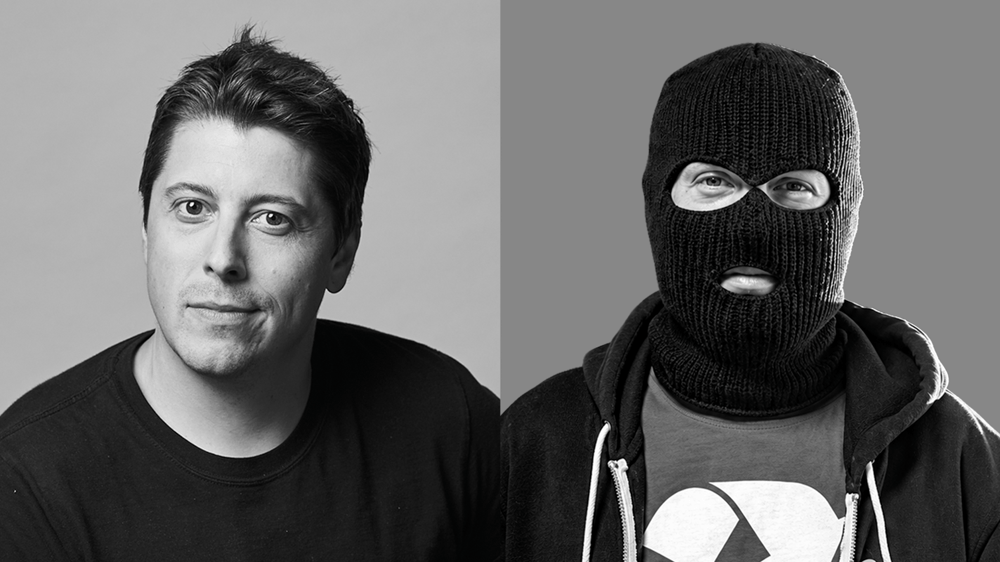
In an age of remixes, memes and creative repurposing, has our relationship with plagiarism changed in advertising? Philippe Brassard, Associate Creative Director, thinks it has. So he decided to find out. He sat down with Joe La Pompe, who has been calling out a lack of originality in the advertising industry since 1999.
Yes. The pace of my discoveries has never slowed down. In fact, it’s accelerated over the past few years. The more campaigns that come out around the world, the more there are, mathematically speaking, that are bound to lack originality.
There are more and more places online talking about advertising, that’s true, and every aspect of the industry is now covered by media and influencers. But when it comes specifically to plagiarism, I’ve carved out a niche where I remain a go-to source, and pretty much the only person dedicated exclusively to it. There are now social media accounts calling out plagiarism in contemporary art, fashion, comedy, logos, music samples, and so on. But in advertising, to my surprise, I’ve remained relatively alone.
There’s no question that it has less of an impact than it used to. When I started in 1999 (last century!), ending up on Joe La Pompe was genuinely embarrassing. It was considered a career-killing professional mistake. At the same time, back then, you could easily steal an idea “under the radar,” because there was no way for anyone to find the original. But I’m not so sure creatives and agency bosses have stopped caring.
It depends on which column they end up in (Original or Less Original). I still get the occasional knee-jerk reaction. After all, it touches on creatives’ reputations and integrity. They don’t necessarily appreciate having that called into question. Although I’m less likely to accuse them of being outright idea thieves than of skipping the ‘checking what’s already been done’ or ‘benchmarking’ stage.
That said, nobody really enjoys discovering that their campaign has already been done, identically, in the past. As Jacques Séguéla, a legendary French adman from the last century, once put it: “To say it again without repeating yourself is the supreme art of advertising.”
I don’t think we’re more forgiving, or that the industry has become more tolerant. I think Cannes juries are increasingly overwhelmed and simply have far too much material to judge to check everything properly. There are thousands of entries in each category, with case studies that seem to get longer every year. And it’s not exactly in a festival’s interest to disqualify agencies that have paid hundreds of dollars to submit their work. It’s impossible to know everything that’s already been done. It’s beyond the capacity of the human brain. Maybe AI will soon be able to help us flag work that’s already been done in a way that’s too similar. But for now, we’re not there yet.
There’s no doubt we’re drowning in a constant stream of campaigns and content of every kind. There are probably a thousand times more of them every year than when I started in 1999. Everything moves faster, and everything gets lost in the constant flood of new work. Very little rises above the noise, and a lot gets forgotten almost immediately. And online, creativity increasingly follows trends, memes and copy-and-paste culture… Basically, everything has a tendency to look alike and endlessly recycle itself. A lot of people have simply given up on the goal of being original. There’s a feeling that we’ve seen everything before and are just going around in circles. The younger creatives I meet seem less obsessed with originality. They’re much more focused on imitation and conformity. They follow trends day by day, afraid of looking outdated.
What’s certain is that the staggering acceleration of timelines and the rise of new ways of working, like real-time marketing, leave creatives with very little time to conduct targeted, in-depth research. And inevitably, that increases the risk of unconscious and accidental plagiarism.
The ambition to be original that used to drive us is becoming harder and harder to achieve, given the millions of campaigns that already exist. But it’s not impossible. Every year, I still see campaigns that are genuinely innovative in both concept and execution. It just takes more work, more persistence and more patience. These days, you can’t be original by accident anymore. You have to put in the work.
It’s highly subjective. I’m the sole judge. I set the editorial line and decide whether two pieces of work are worth putting side by side. In general, I only publish what strikes me as blatant, something that jumps out at you, something obvious, or something that makes me laugh. Something that reveals a glaring lack of advertising culture. There’s no rule carved in stone.
To me, a copied ad, or at least one that’s too unoriginal, is an ad that adds no value beyond the original. An ad that simply copies something in a dumb, lazy way. Or takes something that’s already been done and does it worse. In short: if it’s already been done, don’t do it again, at least not the same way.
Even with all the tools we have today, figuring out whether the idea in your head has already been done is still extremely difficult. When I started, checking whether an idea had already been done was practically impossible. You had to dig through very expensive books, assuming you could even get your hands on them. It could take days. Today, we have all kinds of tools at our fingertips: search engines, free and paid databases, social media and AI. But looking for something specific has become like searching for a needle in a haystack. I still run into the limitations of AI when it comes to research. It has biases, it hallucinates, and quite often, it simply gets things wrong and serves up references that don’t even exist.
I think our sensitivity to plagiarism has changed. There’s no denying it. It’s now so easy to copy, paste, remix and repurpose that it has become part of the creative process. Meme culture has done a lot of damage to the value we place on originality. For younger generations, creating isn’t necessarily about pure invention anymore. It’s often about appropriating and repurposing existing content. That said, I still think an original idea is the holy grail that many people aspire to. You don’t grab attention with lukewarm, generic ideas.
It’s tempting to conclude that everything has already been done, so why bother fighting the recycling. But if there’s one lesson to take away, it’s this: the work that's still genuinely original isn't happening by chance. It has to become a discipline. We need to work harder to do things differently.