Craft is how you build a legacy
Perspectives
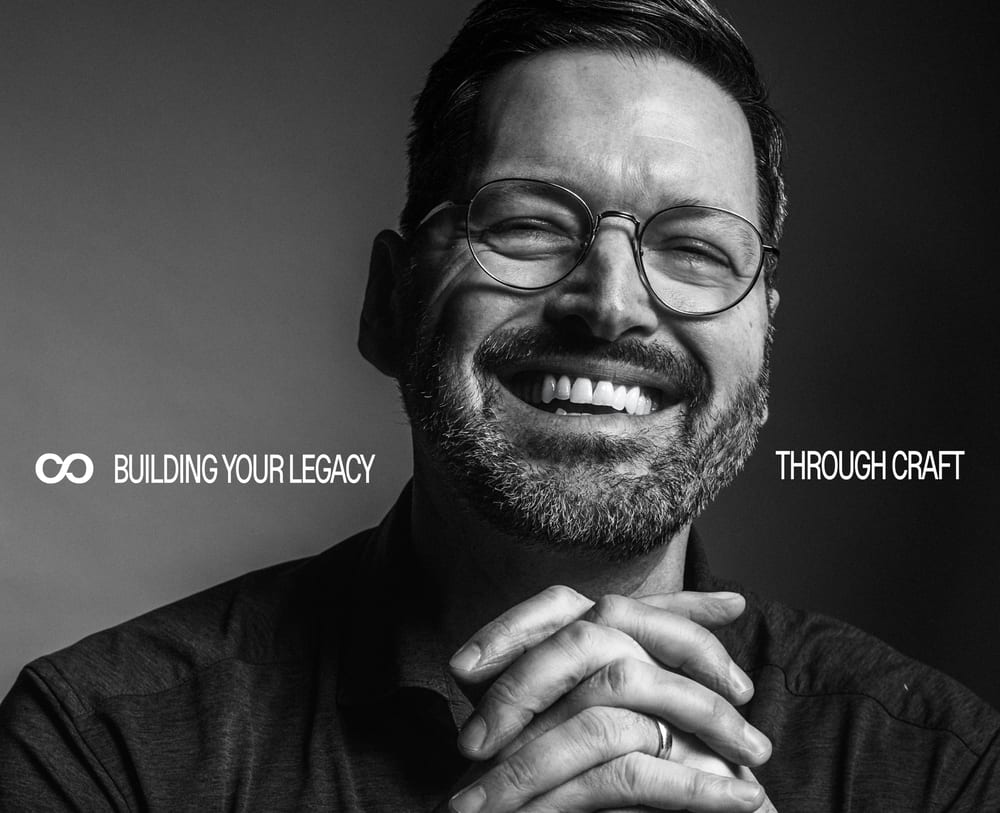

No brand has ever stumbled into a legacy. The most enduring thing this industry makes isn't a campaign. It's the deliberate accumulation of moments that makes people feel something.
When I took on the leadership of Cossette’s Toronto office, it got me thinking seriously about what that actually means in practice. What are the raw materials for building a legacy? And are we, as an industry, investing in them seriously enough?
A colleague of mine from our Montreal office recently used a word that stuck: métier. It’s French for craft, for trade, for the deep, practised mastery someone brings to their discipline. She wasn’t being nostalgic. She was being precise about something the industry risks undervaluing at exactly the wrong moment.
My colleagues and I believe you cannot build a lasting legacy on speed alone. Legacies are built on feeling. They’re built on the accumulated weight of moments where a brand made someone feel seen, comforted, lit up, or less alone. That is craft. That is métier. And it’s still, in 2026, the most powerful force we have.
When you suddenly have access to infinite speed and infinite scale, as we do today, the question of what you choose to make becomes more important, not less. AI is changing how fast and how broadly we can think, but it is not a workaround for judgement. The soul of what we make? That still has to come from somewhere deeply human. That’s the métier that matters.
From the attention economy to the attachment economy
This is why I keep coming back to a shift I think we’re living through but haven’t quite named collectively yet. For decades, we’ve been operating in the attention economy—where the scarce resource is eyeballs, and the job is to grab them first. That model isn’t obsolete, but it’s no longer sufficient. We’ve moved into what I’d call the attachment economy. The scarce resource now is trust, belonging and the sustained sense that a brand genuinely understands the world you inhabit.
Think about what that world looks like right now: economic anxiety, geopolitical instability, a news cycle engineered to exhaust. In that environment, people aren’t hungry for more stimulation from brands. They’re hungry for presence. Comfort. Levity when it’s possible, and sincerity when it isn’t. The brands that build legacies in this climate are the ones that demonstrate they can be a stabilizing force in an unstable world—not just a voice competing for airtime.
That is an intensely human brief. And it demands teams who have done the hard, patient work of learning to emote at a professional level.
Where craft shows up
If you’ll allow me, I’d point to some of the work coming from the Cossette Toronto office to illustrate my point. The Menu Song Remix for McDonald’s Canada took a 1989 sing-order ad that never really left the cultural memory, noticed fans were already remixing it on social and turned that observation into a full campaign starring hip-hop artist and former McDonald’s crew member Lil Yachty, paired with a limited-edition Remix Menu built from real fan-invented hacks. It wasn’t a revival—it was a conversation already happening, met with craft.
Then there’s Help Us Remain for Egale Canada, a three-minute film anchored by the story of Ann, a trans woman grappling with early-onset dementia, whose partner must now advocate for her gender-affirming care since she’s no longer able to do so herself. That’s work that doesn’t just inform—it becomes an unforgettable memory.
And for Walmart Canada’s holiday season, rather than reaching for the usual emotional tropes, the team found an insight in a very specific parenting truth: that determined little snoops will search every closet and drawer in December. The answer was Peek-Proof Packaging—decoy boxes disguised as cat litter and vacuum cleaners, hiding the season’s most-wanted toys in plain sight. No sweeping anthem. Just a real problem, solved with wit.
That is craft. That is métier.
These aren’t accidents. They’re the product of practitioners who have sharpened their métiers—who recognize the signals in culture and behaviour, and translate them into ideas that make people feel seen.
The business case for the long view
If craft is what builds legacy, then the implications for how we work are straightforward.
First, craft builds brand equity that AI cannot dilute. Efficiency might help you survive the quarter, but only work that feels genuinely human survives the decade. In an automated world, the “soul” of what you make becomes your only true differentiator.
Second, seniority has to be applied to the work, not just to its oversight. The value of experience lies in the final 5%—the subtle shifts that transform something functional into something people carry with them.
And finally, we have to prioritize resonance over mere speed. If we aren’t measuring trust, emotional attachment and cultural impact, then we’re not really measuring effectiveness—we’re just measuring how quickly we can produce noise.
Building for emotional precision
My focus as GM is to ensure that our Toronto team is as emotionally sharp as they are strategically capable. That means keeping senior talent close to the work, not managing it from afar. It means protecting the space made for creative risk and genuine ambition. It means building an environment where the discomfort of a truly original idea is welcomed rather than smoothed away at the first sign of friction.
AI will accelerate many things. It will surface more options, generate faster and help us see patterns we’d otherwise miss. I want us to use it aggressively and intelligently. But I want our human teams to be irreplaceable—not because we’ve insulated them from technology, but because we’ve invested so deliberately in their ability to feel, empathize and translate that empathy into work that genuinely attaches people to brands over time.
A legacy isn’t something that happens to a brand. It’s something a brand earns—built by people, one felt moment at a time.
That’s the brief. And that’s the métier worth mastering through effort, repetition and trial and error.
This article was originally published in Campaign on June 30, 2026.
By Bryden McDonald, Senior Vice-President and General Manager, Cossette Toronto